Republished with permission from Robyn O’Brien
Last Tuesday, a Houston startup called Fervo Energy went public on the Nasdaq. It raised $1.9 billion on its first day. Its stock opened 35% higher. By noon, it was worth more than $10 billion.
You might wonder what a geothermal energy company has to do with the food on your family’s table.
I grew up in Houston, got my MBA from Rice, and spent years in finance covering the food industry. Fervo’s CEO, Tim Latimer, is also a proud Texan who left the oil fields for Stanford and came back home to build something that could outlast them. Rice is even a formal research partner on the geothermal technology that just went public. This is a Houston story, and Rice has always known that the people closest to how legacy industries actually work are often the ones best positioned to disrupt them.
And what happened last week with Fervo isn’t just an energy story. It’s a blueprint, and regenerative and organic agriculture needs to read it carefully.
I know what it looks like when capital decides it’s done waiting. And Fervo’s IPO just showed that it’s done waiting.
Reliability Is the New Premium
Fervo didn’t win over investors by being “alternative” energy. It won by being better energy. Twenty-four hours a day, seven days a week, carbon-free power, regardless of weather, regardless of season. In a world of rolling blackouts and AI data centers that never sleep, reliability stopped being a nice to have. It became the whole game.
I think about this every time I hear regenerative and organic organizations struggle to articulate their value proposition. The story isn’t actually that the food is “cleaner” or their methods are more ethical, though both are true. The story is that healthy soil delivers consistent outcomes, year after year. Drought hits and the regenerative farm holds water. Input costs spike and the organic operation is already off the treadmill. That’s reliability. That’s what Wall Street just paid $10 billion for in a different sector.
The food industry needs to tell that story in those terms.
Borrow the Drill
Here’s what surprised people most about Fervo: the technology that unlocked geothermal’s potential came from oil and gas. Horizontal drilling. Fracking techniques. Reservoir engineering. The same tools that built the fossil fuel economy are now being used to replace it.
I get the instinct to recoil from that. Believe me, I do. I was recruited by the oil and gas industry out of business school (Enron and Exxon, to be exact) and had no interest in joining them. But purists don’t build industries, pragmatists do.
Regenerative agriculture is sitting on an analogous opportunity. Satellite soil sensing. AI-driven carbon verification. Precision fermentation. Tools developed in other sectors can dramatically accelerate what is currently slow, expensive, and hard to prove. The farmers I admire most aren’t waiting for a perfect set of tools built by perfect companies. They’re taking what works and putting it to use.
Show Me the Cost Curve
Between 2022 and 2025, Fervo cut its drilling costs by 70%. That number is in the IPO filing. It’s a fact investors could underwrite. It told a story not about where geothermal is today, but where it’s going.
This is where our food movement has real work to do. We defend current cost premiums when we should be showing the trajectory. Every year that a regenerative farm builds soil carbon, it needs fewer inputs. Every year the supply chain matures, organic price premiums compress. That’s a cost curve. That’s a story investors can back.
When I was on the equity desk, we weren’t investing in what a company was. We were investing in what it was becoming. We need to show that math.
The Google Lesson
Before Fervo had a single commercial power plant running, Google signed a long-term purchase agreement to buy its electricity. That contract didn’t just give Fervo revenue, it gave every investor in the room a reason to believe. One anchor buyer changed the entire risk profile of the business.
Food companies need to play that role for regenerative and organic agriculture. Not as charity. Not as PR. As strategy. Lock in forward supply agreements with farms in transition before those farms have completed the switch.
Be the Google.
The farmers who can’t afford the risk of transitioning their land to regenerative practices aren’t failing because of a lack of conviction. They’re failing because no one has de-risked the demand side.
That’s fixable. It’s a choice.
Stop Leading with Climate
I’ll say something that might surprise people coming from me: Fervo succeeded in the current political environment partly because it didn’t lead with climate.
It led with reliability. With energy security. With American jobs. With technology that both a Biden DOE grant-maker and a Trump-era Energy Secretary could get behind. The result? Bipartisan support. Federal land auctions. Two bills moving through Congress simultaneously.
Regenerative and organic agriculture has the same opportunity, and largely hasn’t taken it. Soil health is water retention. It’s drought resilience. It’s reduced dependence on foreign-made fertilizer. It’s rural economic stability. These aren’t liberal or conservative values. They’re farming values. And it’s national security.
When we lead with carbon credits and climate targets, we win half the room. When we lead with yield resilience and input independence, we win the whole country.
I started asking hard questions about our food system because of what happened to my daughter at a breakfast table. I came to this work not as an activist but as an analyst, someone trained to follow the money and ask what it means.
The money, right now, is flowing toward energy systems that are reliable, scalable, politically durable, and getting cheaper every year. Fervo just proved you can take a century-old technology, apply modern engineering, line up anchor buyers, reframe the politics, and convince Wall Street to write a $10 billion check.
Soil has been foundational to food security, nutrient density and water retention for longer than geothermal has been producing power. We have the science. We have the farmers. We have the demand signal. What we need now is the same discipline Fervo showed: building the institutional architecture that turns a compelling idea into an investable asset class.
So here is my ask, specific, and urgent.
To the food companies: Stop treating regenerative sourcing as a sustainability report line item. Sign five-year forward purchase agreements with farms in transition this year. Be the anchor buyer. Get on the plane. Pick up the phone.
To the institutional investors: The USDA’s own data shows that organic and transitioning farms outperform on operating margins as soil health compounds. You are sitting on a mispriced asset. Entrenched interests are protecting the status quo. Get your analysts into the field and on the farm.
To the farmers and the advocates: Retire the slide deck that leads with carbon sequestration numbers. Lead with water retention. Lead with input cost reduction. Lead with the fact that healthy soil is national food security. Tell the story Wall Street can fund and Washington can defend, because it happens to also be true.
To the land grant universities and ag schools: Fervo built its cost curves on rigorous data collection from day one. Our transition farms need the same standardized measurement infrastructure, not in five years, not after the next Farm Bill, but now. Take a hard look at who is funding the data capture, and when you see the conflict of interest, name it.
Fervo Energy didn’t wait for the perfect political moment. It built something undeniable and let the moment come to it.
We have a food system feeding 330 million people on soil that, by some estimates, has lost a third of its topsoil in a century. That is not a slow-moving crisis. It is an urgent one. And urgent problems, when properly framed and properly financed, have a way of attracting urgent capital.
The blueprint is sitting right there on the Nasdaq. Let’s use it.
Robyn O'Brien
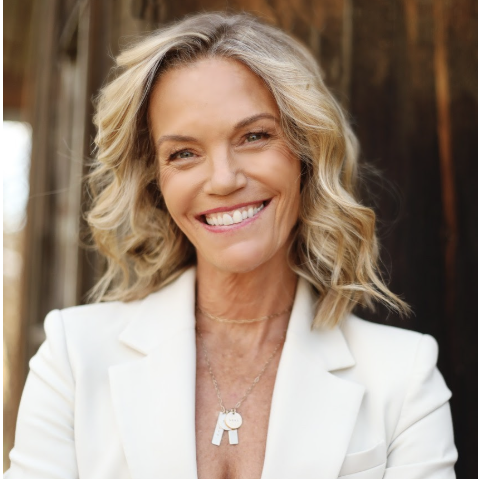
Robyn O’Brien began her career as a financial analyst covering the food industry and later became one of the earliest voices identifying systemic risks and investment opportunities driven by shifts in consumer demand, health, and environmental pressures. She is a Fulbright fellow, adjunct professor at Rice University and the author of the award-winning book, The Unhealthy Truth, How Our Food is Making Us Sick and What We Can Do About It, published by Random House in 2009.
She operates at the intersection of courage, innovation and what comes next.