
Republished with permission from Steve Schmidt
Pete Hegseth wants an audience for an execution.
The secretary of defense wants Americans to watch soldiers shoot Nidal Hasan, the murderer responsible for the Fort Hood massacre. The Pentagon has confirmed plans to livestream his death. Hegseth has found another occasion to confuse the responsibilities of his office with the production requirements of a television show.
The proposal is abominable. It is immoral. It is also an invitation to ask whether this blithering incompetent has considered what his spectacle might accomplish for the enemies of the United States.
Hasan murdered 13 people. His victims deserve remembrance. Their families deserve respect. His guilt supplies no moral permission to turn his death into programming. There is no obligation to become a spectator because the government has supplied a condemned man and a camera.
An execution and its broadcast are separate decisions. Supporting the sentence does not require applauding the show. Hegseth must explain the purpose of assembling an audience, the principle governing that decision, and the security assessment behind it.
What will America gain?
What might its enemies gain?
Hegseth presumably wants the pictures to communicate the consequences of attacking America. Jihadist propagandists could use precisely the same pictures to communicate the rewards: immortality, recognition, and a final appearance before a worldwide audience.
They could erase the victims from the story, detach the footage from the evidence, and present a murderer as a martyr confronting American soldiers. Every subsequent replay would become another opportunity to preach grievance, vengeance, and emulation. Washington would produce the original footage. Its enemies could determine the meaning for their own audiences.
That outcome is a serious risk, not an established future fact. But a competent defense secretary would recognize it. Research from West Point’s Combating Terrorism Center found that Anwar al-Awlaki’s influence endured after his death, enhanced by the martyr status his admirers assigned him. Death does not necessarily extinguish a terrorist’s usefulness.
For someone who welcomes death as religious fulfillment, threatening death may fail as deterrence. Adding international celebrity could make the calculation worse. Where is Hegseth’s evidence that a worldwide broadcast makes Americans safer?
We have confronted this question before, with a terrorist whose crimes dwarfed those of Hasan.
After American forces killed Osama bin Laden, his body was washed, wrapped, and buried at sea from the USS Carl Vinson. Religious remarks were read and translated into Arabic. Officials described their efforts to observe Muslim burial practices. The United States did not display his remains as a trophy.
Barack Obama withheld the death photographs because they could incite violence and become propaganda. He explained:
We don’t trot out this stuff as trophies. We don’t need to spike the football.
Why no head on a pike on the South Lawn? Because displaying a corpse would accomplish nothing worthy of the country. Restraint protected American interests and preserved a boundary around American conduct. Bin Laden’s killing during a raid differs from a judicial execution. The danger of making death a trophy remains.
Hegseth now proposes to cross that boundary with soldiers and cameras.
Why Hasan? The atrocity, the location, and the jihadist motivation make the case politically potent. Those facts explain its appeal as a spectacle without establishing any principled justification for one.
Is the rule that every military execution becomes a broadcast? Only terrorist executions? Only particular terrorists? A Muslim murderer provides an easy first subject for a country invited to applaud. What limit will bind the officials who inherit this precedent?
Consider the recent arrest of an American Marine accused of murdering and robbing a Japanese woman in Okinawa. He denies the allegations and remains in Japanese custody. His case is not Hegseth’s to adjudicate. But it exposes the question: if an American serviceman is convicted of a comparable atrocity under American jurisdiction, does Hegseth want another televised killing? Another afternoon attraction?
Justice requires standards. Spectacle requires casting.
The secretary’s defenders will say that the public deserves transparency. Then let them demand transparent decision-making: the legal authority, the policy, the alternatives considered, the advice received, and the assessment of terrorist exploitation. An open government can explain how it exercises power without inviting citizens to watch bullets strike a prisoner.
Others will insist that Hasan deserves no consideration. The obligations of government do not disappear when the defendant is monstrous. They exist precisely because public fury is powerful and because officials can exploit it. A standard that depends on sympathy for the condemned is no standard at all.
And the victims must not become a justification for every indignity an ambitious politician wishes to stage. Their loss deserves solemnity. Their names deserve to outlast his. A defense secretary should spend his authority protecting the living, honoring the dead, and preserving the institution entrusted to him. Hegseth instead proposes a broadcast whose consequences he cannot control.
This proposal also gives renewed weight to Mark Milley’s undelivered resignation letter. In 2020, Milley accused Donald Trump of “using the military to create fear in the minds of the people.” He defended equal citizenship across race, religion, and sexuality, and warned against subordinating the military to the principles it had fought.
The military’s moral authority rests on conduct, discipline, and fidelity to constitutional government. Putting soldiers into an execution broadcast risks making their uniforms the scenery for a politician’s demonstration of cruelty. Their service belongs to the republic. Hegseth has no right to spend their reputation on his appetite for attention.
His religious politics make the questions sharper.
Hegseth promoted an interview in which Doug Wilson, a leading figure in his church denomination, supported restoring laws criminalizing consensual gay sex. Wilson’s writings describe homosexual conduct as deserving death while rejecting mandatory execution and invoking Christ’s sacrifice and forgiveness. That distinction must be stated accurately. It does not erase his support for criminalization.
I have seen no evidence that Hegseth advocates executing gay people. I want him asked whether he believes they should be criminals, what punishment he thinks appropriate, and whether he rejects government enforcement of religious doctrine against his fellow citizens.
Saudi Arabia demonstrates the danger of religious condemnation backed by state punishment. Consensual same-sex activity can carry the death penalty. A Sri Lankan worker, Sivarasa Anojan, reportedly faces execution over a Facebook comment deemed blasphemous. These are the stakes when religious offense becomes a government’s criminal charge.
Does freedom look like bodies displayed to establish that a nation is pure? Do cranes around Washington become monuments to righteousness? That is the nightmare public killing and theocratic politics summon. It is a warning about the power being normalized, not a claim that such a plan exists.
Hegseth’s sneers about “beardos” and “weirdos” already reveal contempt for people he considers unsuitable. Americans deserve to know where his vision of governmental power ends.
And they have already paid for his recklessness. “Signalgate” supplied evidence, not speculation: the Pentagon’s inspector general found that sharing sensitive operational information on his personal phone could have endangered American troops.
The swagger keeps growing as the judgment keeps failing. His public performances suggest an official increasingly incapable of distinguishing leadership from intimidation. Each new provocation demands that everyone else accommodate his vanity, while service members bear the consequences.
When the electoral tsunami I expect arrives, Hegseth should be the first senior official forced from office in its aftermath. Congress must demand his departure, investigate his decisions, and make his failures impossible to conceal behind another performance.
The United States military must be liberated from Pete Hegseth’s reckless leadership.
It is profoundly irresponsible.
No more.
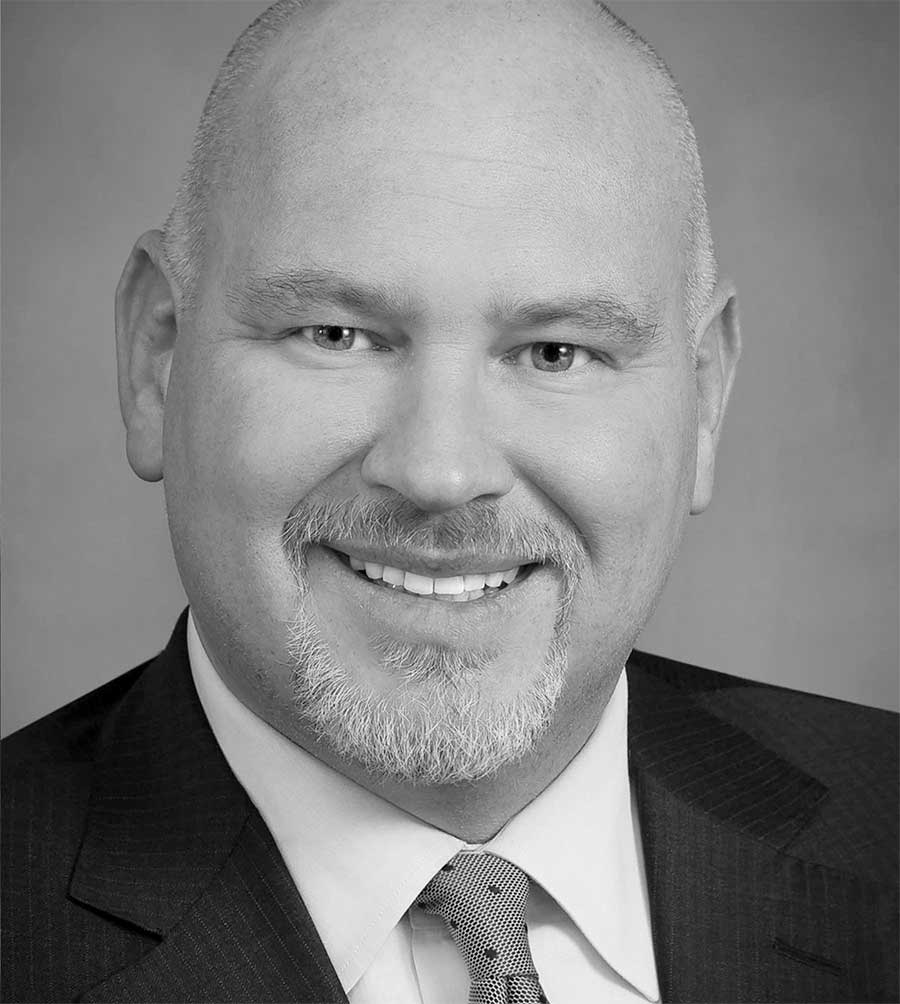
Steve Schmidt
Steve Schmidt is a political analyst for MSNBC and NBC News. He served as a political strategist for George W. Bush and the John McCain presidential campaign. Schmidt is a founder of The Lincoln Project, a group founded to campaign against former President Trump. It became the most financially successful Super-PAC in American history, raising almost $100 million to campaign against Trump's failed 2020 re-election bid. He left the group in 2021.