
Republished with permission from Steve Schmidt
Disaster is at hand.
Not because the United States of America is weak. It is not.
America possesses the most powerful military force ever assembled. Its sailors patrol every ocean. Its aircraft can reach virtually anywhere on Earth. Its soldiers stand watch across the world. Its nuclear forces possess unimaginable destructive power.
The weakness is at the top.
It is a weakness of character, competence, judgment, restraint and truth.
The weakness has a name: Pete Hegseth.
He is incompetent, inept, extremist and bullying. He is profoundly lacking the stature and dignity required of the office he occupies.
Most dangerously, he is presiding over an American military in which fear, suspicion, ideological conformity and personal loyalty are displacing the traditions that made it the greatest fighting force in the world.
This isn’t normal. It isn’t reform.
It is institutional vandalism.
Some of the most distinguished American military leaders of the last half-century are warning us.
Former Air Force Secretary Frank Kendall, who served across Republican and Democratic administrations, described Hegseth’s Pentagon this way:
There’s a climate of fear like I’ve never seen before.
Kendall said people are frightened of losing their jobs, and described Hegseth’s removals as “purges” driven by culture wars and ideology. He warned that when senior officials fear dismissal, it becomes impossible to receive good advice.
That is how catastrophe approaches: when the people responsible for preventing it become afraid to speak.
Admiral William McRaven understands the danger. As commander of United States Special Operations Command and overseer of the operation that killed Osama bin Laden, he warned that Hegseth’s unexplained removal of accomplished senior officers could make generals and admirals afraid to offer candid professional advice. He said:
The chance for military miscalculation will grow dramatically.
That is not partisan criticism.
It is a warning.
Lieutenant General Ben Hodges said:
I’ve never seen anything like what we’re seeing now.
Lieutenant General Mark Hertling warned about politicization, and offered a principle that should be engraved above the Pentagon:
Keeping politics out of the military is what keeps the military out of politics.
Major General Paul Eaton warned that Hegseth is moving toward “ideologically pure armed forces” increasingly pliant to political leadership.
General Barry McCaffrey, a retired four-star combat commander, called Hegseth “volatile,” and accused him of failing in the essential responsibility of a senior national-security official: speaking truth to the president.
These men know command, war and the consequences of incompetence.
We should listen.
There is something Captain Queeg-like about Pete Hegseth’s Pentagon.
The strawberries are always missing. Someone must have taken them. Someone must have betrayed him. Someone must be disloyal. Someone must be investigated, removed, humiliated or destroyed.
The hunt never ends because grievance never ends—except this isn’t the USS Caine.
It is the Department of Defense of the United States—and there is no Secretary of War. There is a secretary of defense.
Donald Trump can authorize Hegseth to use “Secretary of War” as a secondary title. Hegseth can put it on the building. Government websites can display it. Signs can be replaced.
It does not change the statute enacted by Congress. Pete Hegseth remains the 29th secretary of defense of the United States.
There is something revealing in the desperate need to pretend otherwise.
There is also no Lake America. There is Lake Ontario.
A president can order government databases changed. Google and Apple can accommodate him. Millions of American screens can display the preferred language of political power.
The lake remains Lake Ontario in Canada.
Reality does not change because powerful people demand that everyone pretend otherwise.
These re-namings are not expressions of American greatness. They are evidence of American smallness.
Great nations do not need to rename lakes to prove they are great. Strong presidents do not need antique titles to prove they are strong. Serious defense secretaries do not need theatrical names to prove they are warriors.
A map is supposed to describe the world. When it begins describing the wishes of power instead, language, standards, institutions and truth have all been corrupted.
There was another American secretary of defense once. His name was George Catlett Marshall.
The distance between George Marshall and Pete Hegseth measures the distance between greatness and smallness.
Marshall did not perform strength. He possessed it.
He did not demand personal loyalty from generals. He demanded competence.
He did not surround himself with people who told him what he wanted to hear. He demanded truth.
He did not humiliate weaker people to prove he was powerful. He understood that great power imposed an even greater obligation to exercise restraint.
Marshall understood the first requirement of command: before a man can command others, he must command himself.
Pete Hegseth publicly attacked a Canadian cadet instructor and a 17-year-old attending a summer training camp.
https://twiiter.com/PeteHegseth/status/2094593108755562927?s=20
On one side stood one of the most powerful officials on Earth. On the other stood two females, one of whom is a teenager.
There was nothing tough, courageous or manly about attacking them. It was bullying—cruel, small and revealing.
Character reveals itself in the treatment of people who possess less power than you do.
George Marshall understood that.
Harry Truman understood it too.
When Marshall died on October 16, 1959, Truman offered this tribute:
Honor has no modifying adjectives. A man has it or he hasn’t. General Marshall had it.
Then he spoke about truth:
Truth has no qualifying words to be attached to it. A man either tells the truth or he doesn’t.
Truman called Marshall “the greatest of the great in our time.” He expressed the hope that, when he crossed “the great river,” Marshall would place him on his staff so he could try to do for Marshall what Marshall had done for him.
Honor. Truth. Ability. Character.
Those were Truman’s measurements of George Marshall.
Apply them to Pete Hegseth.
The result is devastating.
Then consider the institution that put Hegseth where he is: the United States Senate.
Donald Trump nominated him. Fifty Republican senators voted to confirm him. Susan Collins, Lisa Murkowski and Mitch McConnell refused. The Senate divided 50–50, and JD Vance cast the deciding vote.
Vance had helped spread false claims about Haitian immigrants in Springfield, Ohio, and later defended his conduct by saying:
If I have to create stories so that the American media actually pays attention to the suffering of the American people, then that’s what I’m going to do.
Harry Truman’s answer echoes across nearly seven decades:
A man either tells the truth or he doesn’t.
The responsibility does not belong solely to Vance. It belongs to every Republican senator who voted yes.
They were not voting on a television host. They were choosing the person who would exercise civilian authority over millions of personnel, America’s global military posture and the most fearsome arsenal ever created.
Their overriding constitutional responsibility was judgment.
They failed—and now the bill is coming due.
Senior officers have been removed. Promotion lists have been interfered with. Experienced commanders have disappeared from positions of responsibility. The Army faces serious modernization challenges, while its leadership has been thrown into turmoil.
Inside the Pentagon, Frank Kendall says:
There’s a climate of fear like I’ve never seen before.
That sentence should haunt the senators who confirmed Pete Hegseth. They were warned about his qualifications, temperament and judgment.
They voted yes anyway.
Advice and consent is not ceremonial. It is constitutional.
The senators who confirmed Hegseth demonstrated a failure of the judgment required by their offices. They own the disorder, the fear, the degradation of standards and the consequences of placing immense military authority in the hands of a man unequal to it.
They cannot say they didn’t know.
The evidence was sitting directly in front of them.
George Marshall built.
Pete Hegseth diminishes.
Marshall elevated talent.
Hegseth hunts for disloyalty.
Marshall wanted officers courageous enough to tell presidents they were wrong.
Hegseth presides over a Pentagon where people are afraid to speak.
Marshall possessed quiet authority.
Hegseth performs toughness.
Marshall understood restraint.
Hegseth bullies teenagers.
Marshall understood truth and honor.
Aircraft carriers cannot compensate for their absence. Nuclear weapons cannot compensate for them. A trillion-dollar defense establishment cannot overcome leaders who mistake obedience for loyalty, grievance for strategy, cruelty for strength and spectacle for command.
America is not weak. America’s leadership is weak.
There is an enormous difference, but when weak, frightened, suspicious and incompetent people control enormously powerful institutions, that difference can disappear with terrifying speed.
The generals are warning us.
The former secretary of the Air Force is warning us.
The evidence is everywhere.
Disaster is at hand.
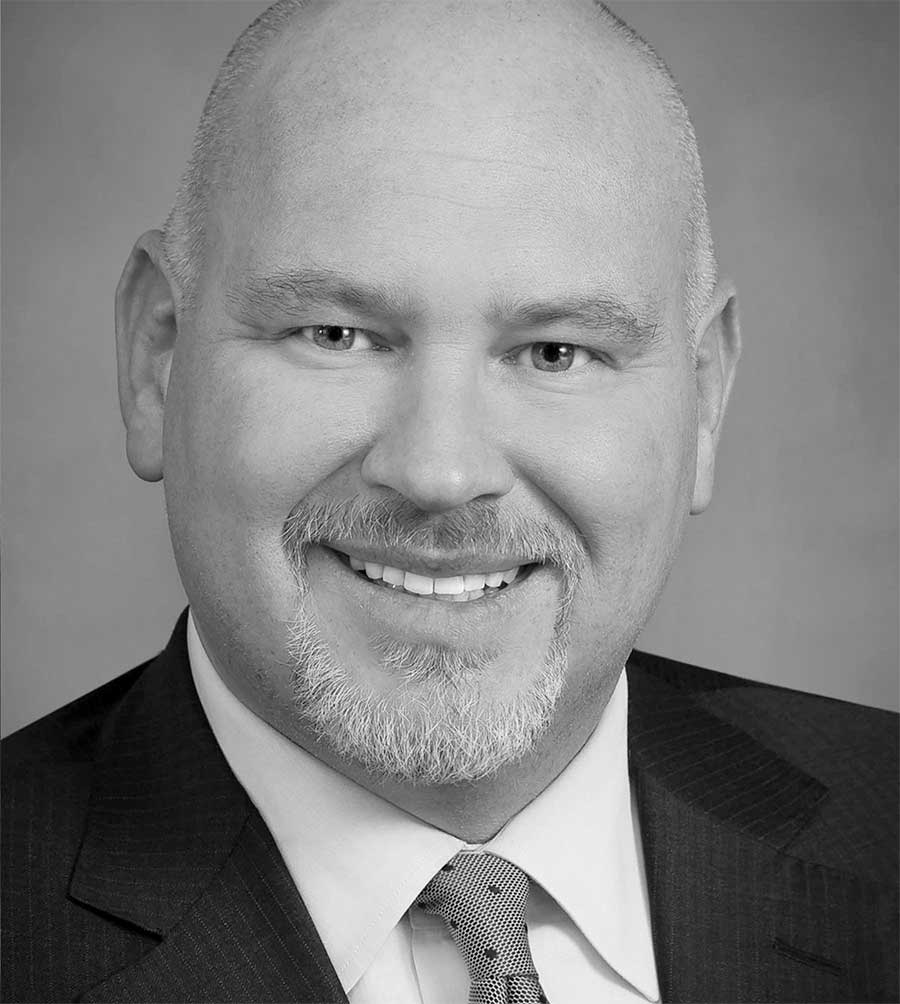
Steve Schmidt
Steve Schmidt is a political analyst for MSNBC and NBC News. He served as a political strategist for George W. Bush and the John McCain presidential campaign. Schmidt is a founder of The Lincoln Project, a group founded to campaign against former President Trump. It became the most financially successful Super-PAC in American history, raising almost $100 million to campaign against Trump's failed 2020 re-election bid. He left the group in 2021.