
Republished with permission from Steve Schmidt
What would you think if you opened a review of a new television series and read this plot?
The president of the United States gives his son-in-law an office in the White House, access to American secrets and responsibility for helping make peace in the Middle East.
The son-in-law develops relationships with the Saudi crown prince, Mohammed bin Salman, and the Emirati ruler, Mohamed bin Zayed. They have money and objectives. He has the president’s ear and the power of the United States behind him.
A bargain takes shape.
They supply enormous sums. He promises to push the Emirati ruler’s agenda with his father-in-law.
Roughly $750 million goes into an account in the United Arab Emirates, held through a charity. The son-in-law becomes a signatory, authorized to use an account he does not own. The charity also serves as cover for secret military and intelligence operations.
A second arrangement involves roughly $1 billion, reportedly intended for the son-in-law’s personal benefit. The Emirati ruler sends it through Azerbaijan to Israel. Prime Minister Benjamin Netanyahu encourages its placement in Israel’s central bank, where it can appear as government money. He requires notice before transactions. Some funds subsequently move through Cyprus.
The son-in-law is still working in the White House.
Then the plot turns to espionage.
Dutch intelligence recruits a Russian hacker who gives it access to a Russian military intelligence server. Inside, the Dutch discover screenshots from the son-in-law’s phone.
The Russians have already penetrated it.
The Dutch find their own way in. When the son-in-law uses his phone, they can see the screen. They observe him accessing the foreign bank account.
The Saudi crown prince. The Emirati ruler. The Israeli prime minister. The American president’s son-in-law. Concealed money, apparent personal benefit and Russian spies watching.
Would you think the writers had gone too far?
This isn’t imaginary. It’s real life.
The son-in-law is Jared Kushner. The president is Donald Trump. These are the financial arrangements and intelligence operations Matthew Cole describes in Vanity Fair, in an excerpt from his book “Princes and Thieves.”
Kushner’s counsel denies the accounts existed and denies wrongdoing. Ambassador David Friedman denies Cole’s account of his involvement in communications about the Israeli arrangement. Those denials belong in the record. They must be tested against the records.
I have read the story many times today. Each time, I have sat with it, then read it again.
I believe it is the most important political story of the Trump era.
Matthew Cole has produced a journalistic achievement of exceptional merit. He describes years of pursuing a story that initially struck even him as preposterous. He followed it across borders, intelligence services and financial arrangements until he could present an account the American public could examine. He identifies what his sources describe, what remains unknown, and what the people implicated deny. That work deserves recognition commensurate with its importance.
The public cannot subpoena a foreign bank or question an intelligence officer under oath. A reporter can begin the work that makes those demands possible. Cole has given Americans specific arrangements to examine, institutions to question, money to trace, and officials to hold accountable. The achievement is in making the concealed conduct visible enough for the country to confront it.
Mark Guiducci and every writer, contributor, editor and investigative journalist at Vanity Fair should feel immense pride. The magazine has published reporting that demands to be read by every member of Congress and every official responsible for protecting American secrets. Other news organizations should follow it, investigate it, and pursue its unanswered questions with the resources its gravity requires.
There are moments when a reporter performs a service to the country that no speech, hearing or campaign can replace. Someone has to discover the story before the institutions can be compelled to answer it. Cole has done work of that order. Vanity Fair has placed it before the public. Now the burden passes to the people with the power to investigate — and to all of us who must insist that they do.
The central accusation is plain enough for anyone to understand.
A senior American official participated in concealed financial arrangements with foreign rulers whose interests he could advance. One arrangement reportedly included a billion dollars intended for his personal benefit.
The public supplied the authority. Foreign rulers supplied the money.
Whom was he serving?
Jared Kushner betrayed his oath. That is my judgment of the conduct Cole describes.
I call it financial treason: the exchange of entrusted American power for concealed foreign financial benefit. The constitutional crime of treason has a specific definition that prosecutors must satisfy; my accusation concerns the betrayal of allegiance at the heart of this reported bargain.
I will not pretend it is a misunderstanding about etiquette.
An official can betray his country through a decision as surely as through a document. Selling influence over American policy means selling something that was never yours. Other people bear the consequences. Other people fight the wars. Other people bury their children.
You collect.
For years, I have asked what Kushner did to obtain the separate $2 billion Saudi investment in his firm after leaving office. In February 2023, I demanded scrutiny by Congress, prosecutors, counterintelligence officials and the press. In September 2024, I explicitly called for coverage “as an espionage story.”
Cole’s reporting moves the inquiry into the White House itself. The financial arrangements he describes began while Kushner was serving.
The public knew about the money after government. This story demands an accounting of the money during government.
I invoked Aldrich Ames in that February 2023 essay. Ames was a CIA officer who sold American secrets to Soviet and Russian intelligence. He pleaded guilty to espionage and tax conspiracy, and was sentenced to life without parole.
The country investigated the betrayal, established the evidence and imprisoned him.
I asked then: “is Ames unlucky, or is it that Kushner is exceptionally lucky?”
Cole’s account does not establish that Kushner committed Ames’s crimes. It raises a question of enormous scope: was American policy itself being influenced through concealed foreign financial arrangements involving the official conducting it?
That question requires the same seriousness with which this country investigates the sale of its secrets.
In February 2018, The Washington Post reported Kushner requested more intelligence than any White House employee outside the National Security Council.
Place that beside Cole’s account of Russian access to his phone.
What did Kushner request? What did he receive? What did he share? What could the Russians see?
Cole does not establish that Moscow blackmailed him. The reporting demands that investigators determine what Russia collected, and whether it exploited the information. A secret financial relationship can become leverage. A foreign government can possess information about an American official that his own government’s overseers do not possess.
There could scarcely be a more urgent reason to examine whose interests that official serves.
Now Kushner sits across from Vladimir Putin in America’s name.
Representing whom?
The question is unavoidable. America cannot entrust negotiations to a man while leaving unresolved reporting of this gravity about concealed foreign financial arrangements and apparent personal benefit.
No one gets to answer for him by pointing at his marriage certificate.
Benedict Arnold’s betrayal was driven partly by greed and grievance. He resented promotion decisions and reprimands. He believed the country had denied him what he deserved. His real service became, in his own accounting, a debt America owed him.
Foreign money offered a way to collect.
Kushner’s route to power was different. Daniel Golden reported that his father pledged $2.5 million to Harvard before Jared was admitted. A former school official said his academic record did not justify admission; the family disputed the account of his merits and the purpose of the gift.
His father’s money opened doors. His marriage opened the White House. He married into plastics, in a manner of speaking, and emerged with responsibility for war and peace.
Privilege was repeatedly presented as qualification. America was expected to accept the substitution.
The country owed him nothing beyond the rights it guarantees every citizen. When he entered public service, he acquired obligations to everyone else.
Remember his response to the crisis preceding January 6.
Kushner was returning from Saudi Arabia as the attack unfolded. Asked later about White House Counsel Pat Cipollone and his team threatening to resign in the weeks before it, Kushner said he was focused on getting pardons done. He dismissed the repeated threats as “whining.”
Whining.
Lawyers alarmed about the exercise of presidential power were an inconvenience.
Donald Trump tried to remain in office after losing an election. Cole’s reporting demands an accounting of Kushner’s use of authority while that administration remained in power. Both stories expose the danger of treating the presidency as a family possession.
The oath requires fidelity to the Constitution. It requires accepting that public power belongs to the country.
It cannot be inherited, retained by force or traded for private benefit.
Watergate exposed presidential wrongdoing and a cover-up that became a constitutional crisis. The alleged reach of Cole’s story extends across foreign governments, covert financing and intelligence services into the conduct of American diplomacy. The comparison should summon the same institutional determination to establish the truth.
Congress investigated Watergate. Witnesses testified. Records were compelled. The president’s power did not extinguish the obligation to answer.
Where is that determination now?
Democrats must demand Kushner’s immediate removal from every diplomatic assignment and an end to any classified access he holds, while an independent investigation proceeds.
Charles Kushner should be recalled from France. That is my judgment about his fitness to represent the country, not a claim that Cole has implicated him in these accounts. An ambassadorship must be justified by public service, not proximity to the president’s family.
Hakeem Jeffries must give a complete account of his private meeting with Jared Kushner.
Were investigations discussed? Were subpoenas mentioned? Who arranged it? Who attended? What communications followed?
The meeting alone establishes no corrupt agreement. It requires an explanation from a man seeking responsibility for congressional oversight. The prospective speaker’s duty is to the people who expect an investigation, including when its subject can reach him privately.
Preserve the records. Obtain the account-opening documents, transfer instructions, authorizations and communications. Identify every intermediary and beneficiary. Establish what the intelligence services discovered. Examine the diplomatic decisions alongside the money.
Put Kushner and everyone with relevant knowledge under oath.
The alleged transaction must be investigated as a potential crime. Accepting benefits corruptly in exchange for being influenced in official acts is bribery. The agreement, the benefits and the acts must be established.
There must be no family exemption. No private accommodation. No assumption that the money is too large, the people too powerful, or the implications too disturbing to confront.
Americans have been asked to endure years of lies, cruelty, corruption and contempt while the most privileged people in the country explain why accountability must always wait.
Enough.
A man entrusted with American power owes his allegiance to the American people. Cole describes a bargain with foreign rulers and apparent personal enrichment at its center.
The country was not his to sell.
Its power was not his to trade.
His oath was to the United States.
Call treason by its name.
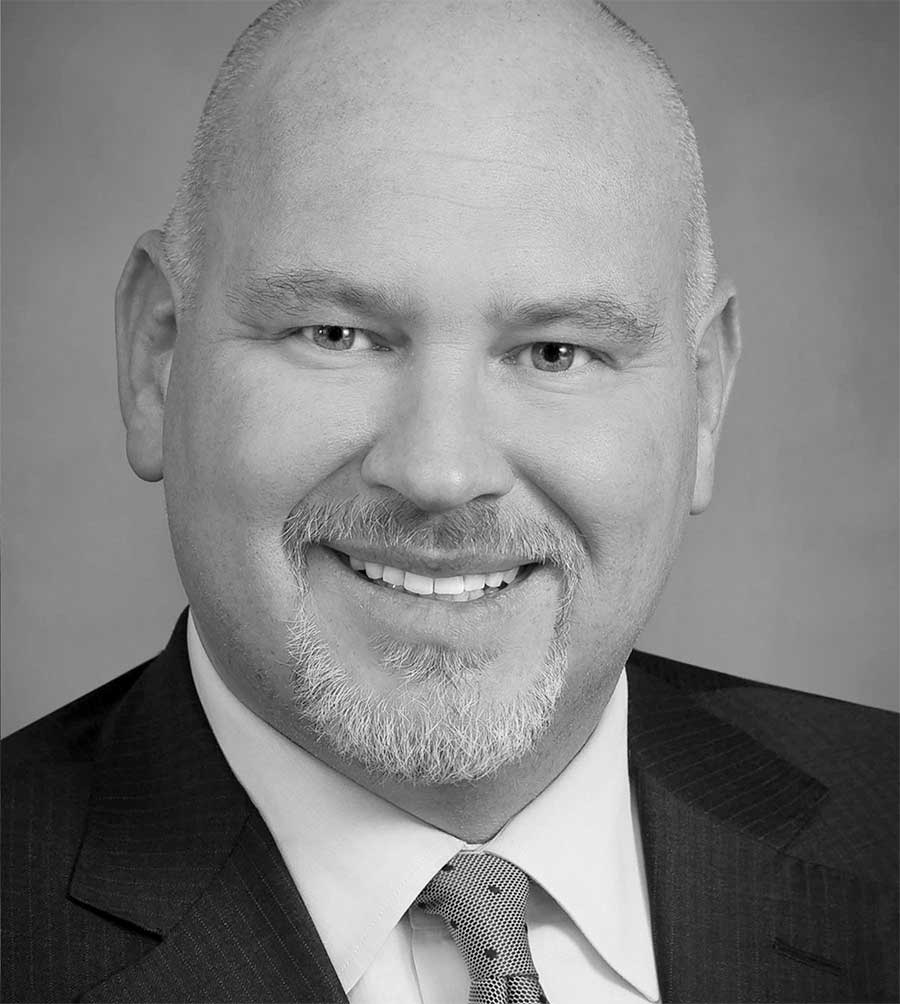
Steve Schmidt
Steve Schmidt is a political analyst for MSNBC and NBC News. He served as a political strategist for George W. Bush and the John McCain presidential campaign. Schmidt is a founder of The Lincoln Project, a group founded to campaign against former President Trump. It became the most financially successful Super-PAC in American history, raising almost $100 million to campaign against Trump's failed 2020 re-election bid. He left the group in 2021.