Republished with permission from Robyn O’Brien
I’ve spent years following the money in our food and health systems, and there’s a rule I keep coming back to: if you want to know what a society values, don’t listen to what it says. Look at what it funds.
By that measure, we don’t value women’s health. Not even close.
Start with the number, and you’ll see exactly why.
One percent. That’s the share of global health research funding, outside of cancer, that goes toward conditions specific to women’s health. Not a rare disease. Not a niche specialty. Half the planet, funded like an afterthought.
Sit with that for a second, because it should stop every family, every policymaker, and every physician in their tracks.
The consequences aren’t abstract. The average woman will spend nine years of her life in poor health, 25% more than the average man. She’ll live longer than he does, but too much of that extra time arrives loaded with disease, disability, and pain that medicine still doesn’t fully understand. Not despite medical progress. Alongside it.
Ask why, and you won’t find a scientific dead end. You’ll find a choice, made year after year, budget after budget, to look past half the population.
It’s a budget line that was never written.
The Data Gap Is Real, and It’s Measurable
For over a decade, the National Institutes of Health, the single largest funder of biomedical research on the planet, has spent less than 9% of its research grant spending on women’s health. Not 9% of a shrinking pie, either. The NIH budget grew substantially over that decade. Women’s health funding, as a share of that growth, actually shrank. By 2023, the most recent year with clean data, out of an NIH budget of roughly $48 billion, that share had fallen to under 8%.
And it’s not just government funding. Follow the philanthropic dollars and the picture is, if anything, worse.
In 2020, of the $471.4 billion given away in U.S. philanthropy, less than 2% went directly to benefit women and girls, and less than 0.3% of that went specifically to women’s health.
Private giving is supposed to be the flexible capital that fills the gaps public funding leaves behind. On women’s health, it has largely left the same gap untouched.
Think about what that means in practice. Conditions that affect tens of millions of women, endometriosis, uterine fibroids, autoimmune disease, the long-term health effects of pregnancy and menopause, remain underexplained, undertreated, and under-researched, not because the science is impossible, but because nobody funded the questions.
I was recruited by Enron out of business school. At the time, their tagline was “Ask why?” So let’s ask why.
Consider that 99% of studies on the biology of aging don’t even account for menopause, a transition that affects roughly half the world’s population and reshapes a woman’s health for the rest of her life. Autoimmune disease alone affects a population that is nearly 80% female, and it wasn’t until 2023, under a congressional directive, that NIH stood up a dedicated office to coordinate research on it.
This isn’t a women’s issue in the narrow sense. It’s a family issue. It’s a maternal-mortality issue. It’s a “why does my daughter’s doctor not have an answer for her” issue.
When the evidence base is thin, every mother sitting in an exam room pays the price in longer diagnostic odysseys, more misattributed symptoms, and treatments built on data drawn largely from male physiology.
This Is a Familiar Pattern
If this sounds familiar, it should. It’s the same dynamic that we are trying to reform in the food system. Capital in the food system flows toward whatever the old metrics reward, not toward what would actually keep people healthy.
I’ve said it countless times. “You can’t fix a broken food system with a broken financial system,” and point to a telling gap: roughly 80% of U.S. households buy some sort of organic food, yet only about 1% of U.S. farmland is actually farmed organically. Farmers who want to convert to regenerative, organic. chemical-free growing often can’t, not because the demand isn’t there, but because the system underneath them won’t let them change.
Federal crop insurance is priced off each farmer’s conventional yield history; switch crops or practices, and that coverage often shrinks along with it. The financing and commodity markets work the same way, built to reward the way farming has always been done, not the way it needs to change.
Swap “financing and commodity markets” for “federal research budgets,” and you’re describing the same failure in women’s health.
NIH funding, like agricultural financing, keeps flowing along old, familiar channels, toward the diseases, populations, and methodologies that have always been funded, while the actual burden of illness, in women’s bodies as in the nation’s soil, goes chronically under-resourced.
In both cases, the infrastructure wasn’t built with families’ long-term health as the organizing principle. It was built around other priorities, and it has proven remarkably resistant to change even after the data made the gap undeniable.
That’s worth sitting with, because it means more money alone won’t fix this. The incentive structure itself has to change, new funding mechanisms, real oversight, real accountability, so research dollars start following the evidence of where people are actually getting sick, instead of just following where they’ve always gone.
A Disease That Affects 190 Million Women Gets Funded Like an Afterthought
Take endometriosis. It’s a chronic, often debilitating disease in which tissue similar to the uterine lining grows outside the uterus, causing severe pelvic pain, infertility, and, for many patients, years of being told the pain is normal. It affects an estimated 190 million women and girls worldwide, roughly 6.5 million of them in the U.S., or about one in ten women of reproductive age. There’s still no blood test for it. The only way to confirm a diagnosis is surgery, so the average patient waits somewhere between seven and ten years, cycling through doctor after doctor, before anyone names what’s actually wrong with her.
And when you go looking for why the science hasn’t caught up, the answer is sitting in the budget.
NIH funded endometriosis research at roughly $28 million in fiscal year 2024, compared to roughly $311 million for prostate cancer that same year.
Prostate cancer affects about 1 in 8 men in their lifetime; endometriosis affects about 1 in 10 women.
Two conditions of comparable scale, one getting more than 11 times the research investment of the other.
A 2021 analysis in the Journal of Women’s Health quantified the gap directly: relative to the burden it causes, endometriosis research receives only about 18 cents in funding for every dollar it should, based on how the NIH funds diseases of comparable impact.
This isn’t a story about competing diseases deserving more or less. It’s a story about what happens when a disease that only affects women simply never gets prioritized in the first place, no matter how many millions of people are living with it.
We are still, in 2026, asking women to wait the better part of a decade for a diagnosis that should take months.
A congressionally mandated National Academies report released in late 2024 didn’t mince words: women’s health research at NIH needs transformative change, and the committee recommended Congress appropriate $15.7 billion in new funding over five years, including a new dedicated institute, to begin closing the gap. That’s not activist rhetoric. That’s the nation’s own scientific academy, in its own report, saying the current approach is inadequate.
And the Trend Line Is Moving the Wrong Way
Here’s what worries me most: at the exact moment we finally have the data naming this problem clearly, funding pressure is moving in the opposite direction. Recent analysis of NIH grant terminations found that female early-career researchers lost funding at higher rates than their peers over the past year, a “leaky pipeline” that was already too narrow, getting narrower.
Every researcher who leaves the field because her funding dried up is a body of knowledge about women’s health that never gets built. That’s not an abstraction. That’s fewer answers for your daughter, your mother, your wife, a decade from now.
What Families Actually Need Us to Do
This isn’t a call for a symbolic gesture or a single new office.
It’s a call to treat women’s health research the way we’d treat any other national infrastructure problem: fund it proportionate to the burden of disease, track the spending transparently by condition, and protect the pipeline of researchers, especially early-career women, who are doing this work.
This is also, unambiguously, a good investment, not just a moral one.
The World Economic Forum and McKinsey Health Institute estimate that closing the global women’s health gap could add more than $1 trillion to the world economy annually by 2040, and that every $1 invested in women’s health returns roughly $3 in economic growth.
This isn’t a cost center. It’s one of the highest-return investments sitting on the table, and we’re leaving it there.
Families don’t experience “the NIH budget” as a line item. They experience it as whether the OB-GYN has good answers about postpartum depression, whether the rheumatologist actually knows how lupus behaves differently in women, whether a teenage girl with debilitating periods gets taken seriously or told it’s normal.
Trace any one of those moments back far enough, and you land on a funding decision made years earlier, by people who will never once sit in that exam room.
We can’t keep building the health of half the population on half the evidence and call it a strategy, any more than we can keep growing food on depleted soil and calling it food security.
This was never a niche cause, and it was never only a women’s issue, it belongs in the same category as clean water, fertile soil, and a working power grid: infrastructure a country either invests in, or ignores, season after season, year after year.
For decades, we’ve left it largely ignored. That choice was made by budgets, not by biology, and it can be unmade the same way.
It’s time we treated women’s health like what it actually is: the foundation everything else in a family’s health grows from.
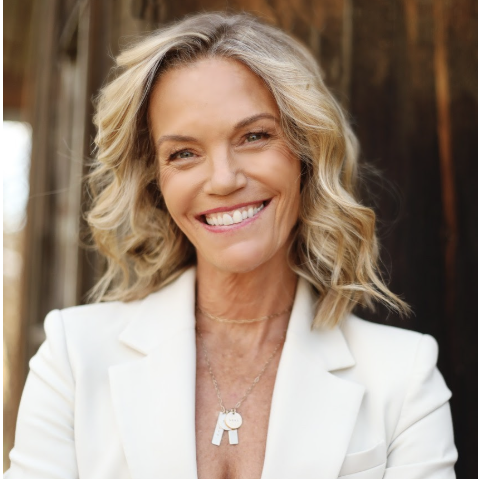
Robyn O'Brien
Robyn O’Brien began her career as a financial analyst covering the food industry and later became one of the earliest voices identifying systemic risks and investment opportunities driven by shifts in consumer demand, health, and environmental pressures. She is a Fulbright fellow, adjunct professor at Rice University and the author of the award-winning book, The Unhealthy Truth, How Our Food is Making Us Sick and What We Can Do About It, published by Random House in 2009.
She operates at the intersection of courage, innovation and what comes next.