
Republished with permission from Steve Schmidt
Sixty-three years ago today, John Fitzgerald Kennedy was murdered in Dallas, Texas.
He was 46 years old.
The 35th president of the United States was riding through Dealey Plaza beside his wife, Jacqueline, when the shots rang out.
In an instant, a young president was dead, a family was shattered, and the trajectory of American history was forever altered.
The country that woke up on November 23, 1963, was not the same country that had gone to sleep two nights earlier.
It never would be again.
The assassination of John Kennedy was more than the murder of an American president. It was the violent interruption of a national promise, and the beginning of an era of disillusionment from which America has never entirely recovered.
Sixty-three years later, I believe the most important question is not what America lost that afternoon.
It is what America has forgotten.
John Kennedy believed in America.
He believed in its possibilities, its obligations, its greatness and its capacity for improvement.
He understood the difference between American power and American purpose.
He knew that strength without judgment was dangerous, that patriotism without sacrifice was empty, and that political leadership without moral courage was a fraud.
He was not a perfect man. He was a complicated man, with flaws, contradictions and failures.
He was also a war hero who understood the price of freedom because he had nearly paid for it with his life.
He was a president who had looked into the abyss of nuclear annihilation and understood that the survival of civilization could depend on the judgment, restraint and character of a single human being.
He believed America had a responsibility to the world that extended beyond its immediate interests.
He believed that freedom was worth defending.
He believed that citizenship was a responsibility.
Consider how far we have fallen.
Last week, Donald Trump sat down with Vladimir Putin and Xi Jinping in Shenzhen, China, and attached the name of the United States to a declaration about peace that did not mention Ukraine.
The country fighting for its survival against Russian aggression was absent.
The man who ordered the invasion was present.
The American president joined him in a declaration emphasizing the immunity of government officials, and criticizing the jurisdiction of the International Criminal Court.
Think about that.
A president of the United States sat beside the leader responsible for the invasion of a sovereign European democracy, and endorsed language protecting the powerful from international accountability.
The contrast with John Kennedy could not be more profound.
Kennedy understood that the credibility of American power depended on the principles for which it was exercised.
Trump treats American power as a personal possession, something to be traded, displayed, exploited, and used for his own glorification.
Kennedy believed the presidency carried obligations greater than the ambitions of the man who occupied it.
Trump believes the presidency exists to serve Donald Trump.
The difference is not merely political.
It is moral.
It is the difference between public service and self-service.
Between duty and vanity.
Between leadership and submission.
Between a country that understands its responsibility to defend freedom and one whose president is willing to accommodate the men who destroy it.
On November 22, 1963, John Kennedy was traveling to the Dallas Trade Mart, where he was scheduled to deliver a speech.
He never arrived.
The speech was written. The words were prepared. They remain part of the historical record.
Kennedy intended to remind Americans that national strength required more than weapons, money or military superiority.
He understood that American leadership required learning, reason, judgment, and an honest understanding of the world.
He warned against those who offered easy answers to difficult problems, who confused rhetoric with reality, and who sought influence without accepting responsibility.
Read those words today.
Think about the American political system.
Think about the politicians who have surrendered their judgment to Donald Trump.
Think about the members of Congress who know better, but remain silent.
Think about the business leaders, media executives, university presidents and powerful Americans who have accommodated an increasingly authoritarian presidency because resistance might cost them something.
Think about the cowardice.
Think about the corruption.
Think about the abandonment of duty.
Kennedy understood that the greatest threat to a democracy was not always the enemy standing outside its gates.
Sometimes it was the failure of the people entrusted to guard them.
Before he became president, Kennedy delivered an address to the Massachusetts legislature in January 1961.
He described four qualities by which history would judge those entrusted with public office.
Courage.
Judgment.
Integrity.
Dedication.
These were not campaign slogans. They were standards of leadership.
Courage meant standing up not only to enemies but, when necessary, to friends and political allies.
Judgment required the humility to recognize mistakes, and admit what one did not know.
Integrity demanded fidelity to principle over personal ambition or financial gain.
Dedication required placing the public good and national interest above every private obligation.
Apply those standards to the people governing America today.
How many would pass?
How many would even recognize the obligation?
We have watched an entire political party surrender its independence to one man.
We have watched elected officials abandon convictions they once claimed were sacred.
We have watched the normalization of cruelty, corruption, dishonesty and political intimidation.
We have watched the systematic degradation of institutions that generations of Americans built and defended.
We have watched powerful people convince themselves that accommodation is prudence, cowardice is strategy, and silence is wisdom.
John Kennedy would have recognized the danger.
He understood that freedom could be lost through indifference as surely as through conquest.
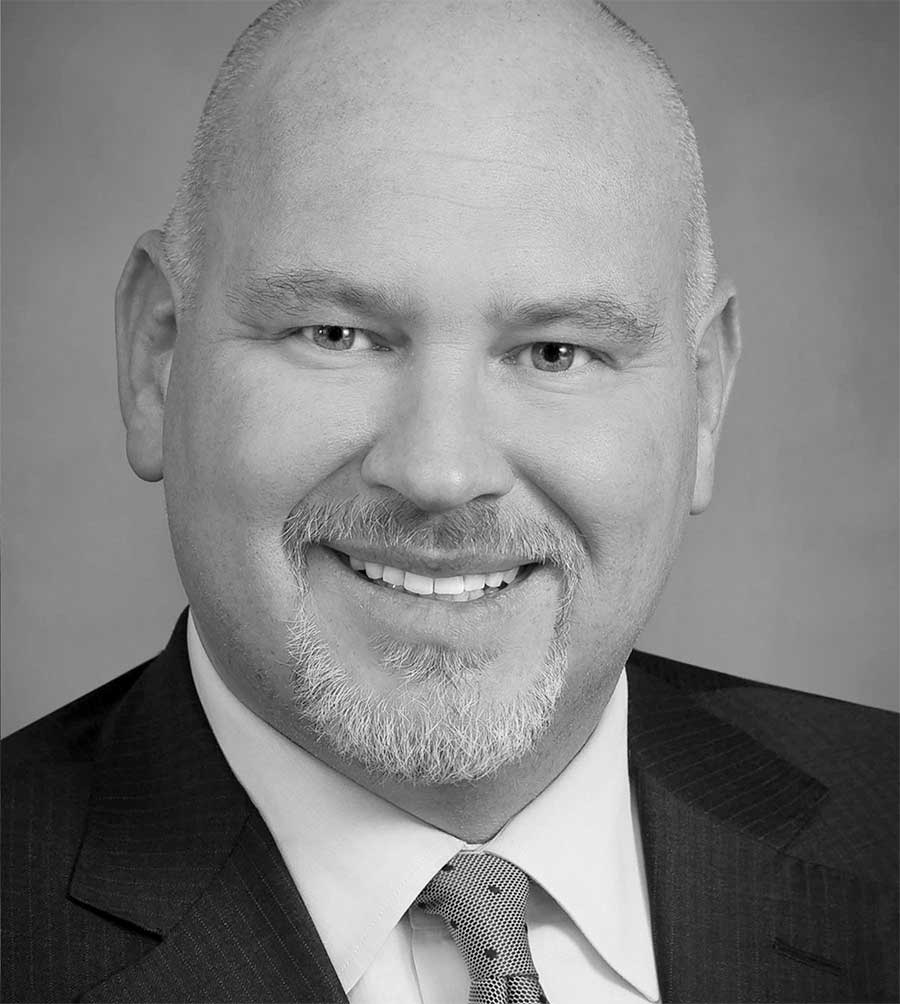
Steve Schmidt
Steve Schmidt is a political analyst for MSNBC and NBC News. He served as a political strategist for George W. Bush and the John McCain presidential campaign. Schmidt is a founder of The Lincoln Project, a group founded to campaign against former President Trump. It became the most financially successful Super-PAC in American history, raising almost $100 million to campaign against Trump's failed 2020 re-election bid. He left the group in 2021.