Republished with permission from Robyn O’Brien
Over the weekend, I was on the Tuolumne River with a group of women whose work spans food, energy, agriculture, and climate.
A young woman on the trip found me at one point, away from the group.
“My father has non-Hodgkin lymphoma,” she said. “I’ve been wanting to talk to you. We were part of the class action lawsuits that the Supreme Court just ruled on.”
“I am so sorry,” I said. “How is your dad?”
“He’s okay,” she said. “He was a landscaper for over 40 years. It’s why they took his case.”
“How old is he?” I asked.
“Sixty-five,” she said. And she spoke about how it appeared as a rash on his skin at first, the failure to diagnose it early.
“He’s been told he can’t go in the sun anymore. He can’t touch the dirt.” She looked up. “It’s his entire life. He’s a landscaper.”
Sometimes grief lands without a noise. It did, at that moment, on a riverbank in the Sierra foothills.
She went on. “We weren’t trying to get rich. We were just trying to cover our costs. We had to rent a small apartment in the city where he was getting treatments. There were a lot of costs.”
“I am so sorry,” I said again, because there wasn’t anything else true enough to say.
“I’m getting married in August,” she said. And I thought “I am so glad he is here to walk her down the aisle” and how proud he must be.
Her story sat with me the whole drive home. It was so earnest and so true. And somewhere on that drive, a question started to form that I couldn’t put down: there must be countless families like this one. What happens to them now?
So I started digging.
What the Supreme Court Actually Decided
Justice Kavanaugh wrote for the majority. Justices Jackson and Gorsuch dissented, arguing the Court misread the statute and that a cancer warning doesn’t actually conflict with federal law at all.
Whatever your view of the legal reasoning, here is what it means for real families: the door that let a jury of their peers weigh their story, the smell of the chemical, the years of exposure, the diagnosis, the debt, that door is now closed for future cases built on failure to warn.
It is worth remembering how this all started. In 2018, a California jury heard the case of Dewayne “Lee” Johnson, a school groundskeeper who spent years mixing and spraying Roundup as part of his job before he was diagnosed with non-Hodgkin lymphoma. That jury didn’t just rule in his favor, they found Monsanto acted with malice for failing to warn him. Johnson’s case was the first Roundup trial to go before a jury, and it opened the door to the more than 100,000 people who went on to sue Monsanto in the years since, including the father of the young woman I met on the river. The door that opened with a groundskeeper’s case in 2018 is the same one this ruling just closed for everyone who might have walked through it next.
For anyone who wants to understand how the science around glyphosate’s safety became so contested in the first place, journalist Carey Gillam’s book Whitewash: The Story of a Weed Killer, Cancer, and the Corruption of Science remains the clearest account of it, years of reporting on how the story was shaped long before it ever reached a jury, or the Supreme Court.
What Recourse Is Actually Left
This is the part I want to be careful and precise about, because families in this exact position deserve facts, not more grief dressed up as hope.
If your family was part of the pending litigation: Before this ruling came down, Bayer had already proposed a nationwide class settlement, announced in February 2026, worth up to $7.25 billion, designed to resolve both existing and future non-Hodgkin lymphoma claims tied to Roundup exposure. A few things matter here:
- It covers people exposed to Roundup before February 17, 2026, who have been diagnosed with non-Hodgkin lymphoma now, or who are diagnosed within 16 years of the settlement’s final approval.
- Reported payouts range from roughly $10,000 to $165,000 or more per family, depending on the severity of the illness, the length and intensity of exposure, and other individual factors. This is not a flat, equal payout, it is tiered.
- It is structured as a long-term compensation program, funded over as long as 21 years, not a lump sum arriving next month.
- It is being actively contested. A group of people diagnosed with non-Hodgkin lymphoma has filed objections, arguing the settlement was negotiated without real adversarial pressure and that it violates their due process rights. Those objections have so far failed to block the settlement, but the fight over its fairness is not over.
- The window to opt out of the class, to preserve the right to sue independently, closed on June 4, 2026. Families who already opted out keep the right to pursue their own claim, though this ruling will make that road significantly harder.
Where to go: The official settlement website is WeedKillerClass.com, run by the court-appointed claims administrator, not a law firm, not a referral service. Right now, registration and claim filing aren’t open yet; the court has scheduled a fairness hearing for August 19, 2026 to decide whether to grant final approval. In the meantime, families can sign up on the site to be notified the moment registration opens, or call the toll-free number, 1-888-403-8201, to talk to someone directly. There’s also an email address, info@WeedKillerClass.com, for questions.
Put that date on your calendar.
A caution, because I want this piece to protect people, not just inform them: a settlement this large draws a lot of secondary websites, law firm marketing pages, “case review” forms, and lawsuit-info sites, all built to route you toward a specific firm, sometimes for a fee or referral. None of that is illegal, but it isn’t the same as the official source.
When you’re searching for this, go straight to WeedKillerClass.com rather than the first result that comes up, and be cautious of anyone who contacts you first, asks for payment up front, or pressures you to decide quickly.
If your family has not yet filed a claim: This is the hardest truth in all of it. The preemption ruling does not retroactively erase what already happened to your father, your mother, your neighbor, the diagnosis is still real, the bills are still real, the loss is still real. But it does mean a new lawsuit built on “they should have warned us” is very unlikely to succeed going forward. The class settlement claims process, if and when it receives final court approval, is likely to be the primary avenue left for people newly coming forward.
What I am not able to tell you: I am not an attorney, and nothing here is legal advice. Every family’s situation is different, how long the exposure lasted, what kind of work it involved, when the diagnosis came, whether a claim was already filed. Those specifics change everything about what options exist. What I can tell you is that mass-tort and personal injury attorneys who have handled Roundup litigation specifically will be able to look at your family’s facts and tell you, honestly, where you stand.
Why I’m Writing This Down
I didn’t grow up planning to write about pesticide litigation on a Monday night after a river trip. I grew up, and built a career, caring about what’s in our food, our water, our soil, and what that does to the people who grow, tend, and harvest it for the rest of us. The young woman I met this weekend wasn’t asking me for anything. She was just telling me about her dad, a man who spent 40 years putting his hands in the earth for a living, and who now can’t touch it, can’t stand in the sun that once was simply part of his workday.
That’s not abstract to me. That’s a father. That’s a family that rented a small apartment near a hospital because that’s what it took. That’s a daughter carrying grief that lands so quietly that it would be easy to dismiss.
We can’t dismiss it.
I don’t have the power to reverse a Supreme Court ruling. None of us do.
But I can pull together what is actually known, right now, about what recourse exists, and put it in the hands of the people who need it, instead of letting it stay scattered across legal filings and press releases that most families will never see.
So this is for Vanessa. And for every other family quietly living some version of her story, wondering where to turn next.
Please share this. Grief is love with no place to go. But if you’re the one living this, or you know someone who is, you can put that love into action and start here: WeedKillerClass.com, or 1-888-403-8201.
I am not an attorney, and this piece is not legal advice. Families exploring their options should consult a mass-tort or personal injury attorney with direct experience in Roundup/glyphosate litigation, who can evaluate the specific facts of their case.
I am the author of the award winning book, The Unhealthy Truth, How Our Food Is Making Us Sick and What We Can Do About It (Random House, 2009) and an executive producer of the award winning documentary, Common Ground, which fuses journalistic expose’ with deeply personal stories from those on the front lines of the food and agriculture movements.
The documentary and my book unveil a dark web of money, power, and politics behind our broken food system.
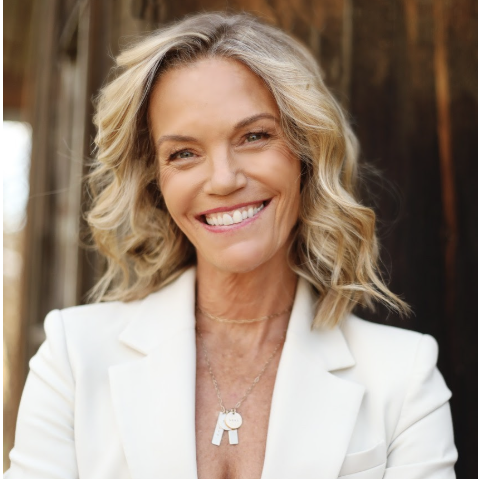
Robyn O'Brien
Robyn O’Brien began her career as a financial analyst covering the food industry and later became one of the earliest voices identifying systemic risks and investment opportunities driven by shifts in consumer demand, health, and environmental pressures. She is a Fulbright fellow, adjunct professor at Rice University and the author of the award-winning book, The Unhealthy Truth, How Our Food is Making Us Sick and What We Can Do About It, published by Random House in 2009.
She operates at the intersection of courage, innovation and what comes next.