Republished with permission from Robyn O’Brien
My youngest child stopped breathing at the breakfast table. I remember that day like it was yesterday.
I was a Wall Street equity analyst. I spent my days following the money inside the food and technology industries, tracking margins and supply chains and shareholder returns for a team managing $20 billion in assets. I was good at seeing systems. What I had not yet seen was the one quietly behind the food on my own kitchen table.
That morning changed that. And what I found when I turned my analyst’s lens on the American food supply was not negligence, exactly. It was something more insidious: a system designed and controlled by a relatively small number of publicly traded companies, optimized for profit, shelf life, and investor returns, and never once required to account for the health of the people eating the food.
Twenty-five years later, the crisis has only deepened. And the people absorbing the fallout, in the grocery store, in the pediatrician’s office, in the school cafeteria line, in the 3 a.m. worry about a child who won’t stop coughing, are overwhelmingly women.
The Crisis Is Not Hidden. It’s Just Been Mislabeled.
Roughly one in three American children now has a chronic health condition, and by some pediatric-hospital-network measures, the share is closer to nearly half. Rates of childhood food allergies have risen 50 percent since the late 1990s, according to the CDC, and federal data show prevalence climbed by roughly that much again between 2007 and 2021. Autoimmune diseases, which disproportionately affect women, at close to four times the rate of men overall, and as much as nine times the rate for conditions like lupus and Sjögren’s disease, are among the fastest-growing categories of chronic illness in the developed world.
The United States spends more on healthcare per capita than any other wealthy nation and still ranks last among peer countries on outcomes like life expectancy, according to the Commonwealth Fund’s most recent international comparison.
We are the sickest wealthy nation on earth.
The food system’s role in this is not speculative. It is documented, peer-reviewed, and largely ignored by the financial structures that govern what gets grown, processed, and sold. The same multinational companies marketing to American families sell cleaner versions of their products in Europe, without the artificial dyes, without the pesticide residues, without additives like potassium bromate and titanium dioxide that are restricted or banned across the EU, the UK, Canada, and Japan and remain legal here.
They are not doing this because European mothers are more vigilant. They are doing it because European regulators demanded it, and American ones, until recently, largely had not.
The word we have been given for this is “personal responsibility.” The grocery store, we are told, is a free market. Read the labels. Make better choices. The problem, if there is one, is yours to solve.
That framing is the most expensive lie the food industry ever told. And women, who read more labels and make more food decisions and carry more of the chronic disease burden than anyone else in this economy, have been paying the price for it.
The Financial Architecture Nobody Talks About
Here is what my years on Wall Street taught me that no nutrition label will ever tell you: the food system is not primarily a food system. It is a financial system. The decisions about what gets into your food, which additives, which pesticides, which processing shortcuts, are made by publicly traded companies whose executives are compensated on quarterly earnings, whose boards are answerable to institutional investors, and whose lobbying arms have spent decades shaping the regulatory environment to protect those returns (see last week’s Supreme Court ruling on glyphosate as a recent example).
The metrics have not changed since 1985. Revenue growth. Operating margins. Return on equity.
There is no line on a food company’s earnings call for childhood allergy rates. There is no metric for the cumulative health burden on the women absorbing the costs of sick households.
The true cost of the food system has never appeared on any balance sheet, because it has always been externalized onto families.
You cannot fix a broken food system without understanding that it is, first and foremost, a broken financial system. And you cannot fix a broken financial system without changing who is at the table, as investors, as board members, as the people determining what gets measured and what gets ignored.
The People Most Positioned to Change This System Are Women
Women are widely reported to make somewhere between 70 and 80 percent of household food purchasing decisions in the United States, and more rigorous recent surveys still show us doing the clear majority of grocery shopping in most households. We are the primary navigators of family health.
We now farm or co-farm 43 percent of U.S. farmland, nearly 388 million acres, according to American Farmland Trust.
We are the fastest-growing group of investors in the country as an estimated $124 trillion in wealth transfers between generations over the next quarter-century, including roughly $40 trillion moving to widowed Baby Boomer and older women from their spouses, and another $47 trillion moving to younger women in the decades after that, according to Cerulli Associates’ most recent projections.
We vote at higher rates than men.
We are increasingly present in corporate boardrooms.
And perhaps that growing presence and economic power are why so many of us are either censored or silenced.
We did not design this system. We did not write its regulations, set its metrics, or sit on the boards that determined what would go into the food supply.
What we have done, for decades, without adequate information or compensation, is absorb the consequences of those decisions in our bodies, our children’s bodies, our household budgets, and our caregiving hours.
That history of consequence is not a liability. It is the source of an extraordinary, largely untapped power.
When women shift purchasing behavior, supply chains follow. When women investors demand transparency and accountability from food companies, boards respond. When women farmers are financed to transition to regenerative practices, the soil recovers and local food economies stabilize. When women vote with a full understanding of what food policy actually means for their families, agricultural bills, regulatory appointments, and food assistance funding look different. When women sit on food company boards, the questions that have never been asked, why do we sell a cleaner product in Germany than we do in Ohio?, start getting asked.
The reason none of this has happened at scale is not that women lack power. It is that women have been deliberately kept from the information they need to exercise it.
What Informed Women Do to Broken Systems
The food industry spends billions on marketing directed at women and almost nothing on transparency. This is not incidental. It is strategic. Confusion at the point of purchase is a competitive advantage. A mother standing in a grocery aisle trying to decode an ingredient list with a toddler in the cart and twelve minutes before school pickup is not a free-market actor making an informed choice.
She is a target.
What happens when that mother has the financial literacy to understand why the same company sells a cleaner product in Germany? When she understands that her 401(k) may be invested in the very companies whose practices she’s fighting at the school board level? When she knows that the chronic fatigue she has been told is stress, and the autoimmune flares she has been told are just how her body is, have documented links to the chemical load in the food supply?
She stops blaming herself.
She starts asking different questions. And different questions, asked by enough women with enough clarity, do not produce incremental change. They produce structural change.
I have watched this happen. A mother in a pediatric allergist’s office who starts reading supply chain disclosures. A woman farmer who realizes that a regenerative transition could make her land more profitable, not less. A portfolio manager who starts asking her fund what metrics it uses to evaluate food company risk. A school board member who reframes a cafeteria contract not as a budget line but as a public health decision. These are not isolated acts. Multiplied across the millions of households where women are navigating food decisions, they are the food system changing from the inside.
The Frame Changes Everything
The exhaustion is real. The diagnoses are real. The impossible task of feeding a family well inside a system that was never designed to support you is real.
I am not here to tell you it is easy or that personal choices are enough.
What I am here to tell you is this: the burden you have been carrying is not a personal failing.
It is the entirely predictable result of being handed the consequences of a system you were never invited to design, never given the financial literacy to interrogate, and never compensated for managing. The confusion is manufactured. The isolation is strategic. And the solution is not to try harder inside a broken system, it is to understand the system well enough to change it.
Markets work best when they have honest information. For too long, the people most affected by the food system, and most positioned to change it, have been the last to receive that information. That is not inevitable. It is a choice someone else made.
We can make a different one.
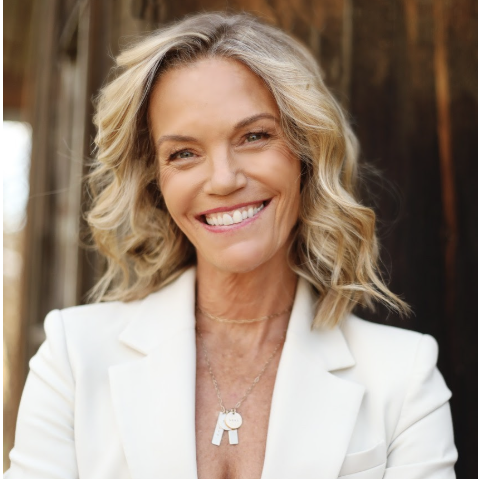
Robyn O'Brien
Robyn O’Brien began her career as a financial analyst covering the food industry and later became one of the earliest voices identifying systemic risks and investment opportunities driven by shifts in consumer demand, health, and environmental pressures. She is a Fulbright fellow, adjunct professor at Rice University and the author of the award-winning book, The Unhealthy Truth, How Our Food is Making Us Sick and What We Can Do About It, published by Random House in 2009.
She operates at the intersection of courage, innovation and what comes next.